
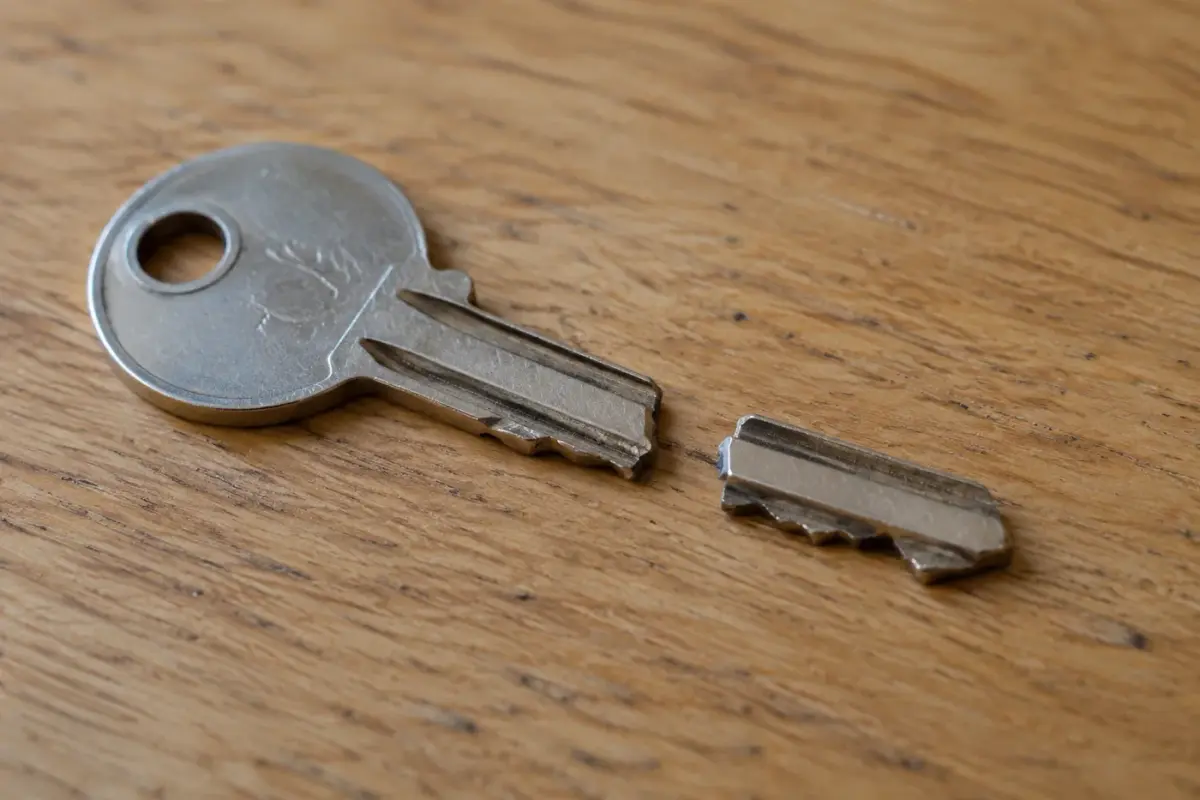
Stop before trying another key or tool
A snapped key can leave part of the blade inside the keyway. Avoid pushing another key into the opening or continuing to turn the broken piece. Improvised probes, glue and drilling can complicate the problem or damage the cylinder. Put the piece in your hand somewhere safe and leave the remaining fragment for an assessment.
Next establish the door's position. Is it open, closed but unlocked, or locked with you outside? Tell the locksmith which situation applies and whether another entrance is available. If the door is open, do not close it simply to see whether the lock still works. Avoid turning a manageable open-door problem into a lockout.
Describe what happened before the break
The useful history starts before the key snapped. Had it become difficult to insert or turn? Did the handle need extra pressure? Was the key already bent, worn or damaged? These observations help distinguish an isolated damaged-key problem from a fault that may still remain in the lock or door after extraction.
You do not need to remove hardware to gather this information. A short account of normal use is enough. Mention whether the same key recently worked elsewhere and whether another key had been behaving differently. Do not test the remaining spare repeatedly in a lock that is already resisting operation.
- State whether the door is open or locked and whether you can get inside.
- Say if a piece of the key is visibly protruding, without attempting to move it.
- Mention stiffness, a dragging door or unusual handle behaviour before the break.
- Keep the loose broken piece and any available product details for the visit.
Understand the extraction and repair decisions
Removing a fragment does not automatically establish that the lock is ready for continued use. The cylinder and the wider door operation still need checking. If the key failed because it was damaged, the work may differ from a situation involving a worn cylinder or a mechanism that is resisting movement.
Ask what has been found and whether replacement is necessary. Extraction, restoring access, supplying a usable key and replacing damaged hardware can be separate parts of the job. A locksmith cannot promise that every snapped key leaves a serviceable lock, and the visible length of the fragment alone does not establish the final scope or time needed.
Agree the visit and charging basis
Give the full postcode, door material and contact number. Explain whether this is an access problem or an open door that needs attention. Ask whether suitable attendance can be arranged and what the initial price covers. If further damage is found, agree how any replacement parts and new keys will be authorised before the work expands.
If a landlord, managing agent or business controls the entrance, identify the authorised contact early. For an existing restricted or shared key system, provide that information too. The right next step may need its system provider. Do not assume that every household door, communal entrance and specialist lock can use the same replacement.
Check the cause has been addressed
Before the job finishes, try the repaired entrance using the correct operating sequence and a sound key. Ask what caused the resistance, if that can be established, and whether further door work is needed. Keep the invoice and replacement details. Follow the manufacturer's maintenance instructions rather than adding a lubricant at random. Use the handle to move the door instead of pulling on a key, and retire a visibly damaged key before it becomes the next broken one.
Need help with your door?
Call 07337 571126, open 24/7, to talk through the fault and attendance availability for your address.
Explore the relevant serviceFurther reading & sources
- MLA: a broken key in a door lock
- MLA: emergency locksmith work and damaged locks
- ERA: cylinder operation and key handling instructions
Product suitability depends on your door and existing hardware. Follow the instructions for the actual product fitted to your property.