
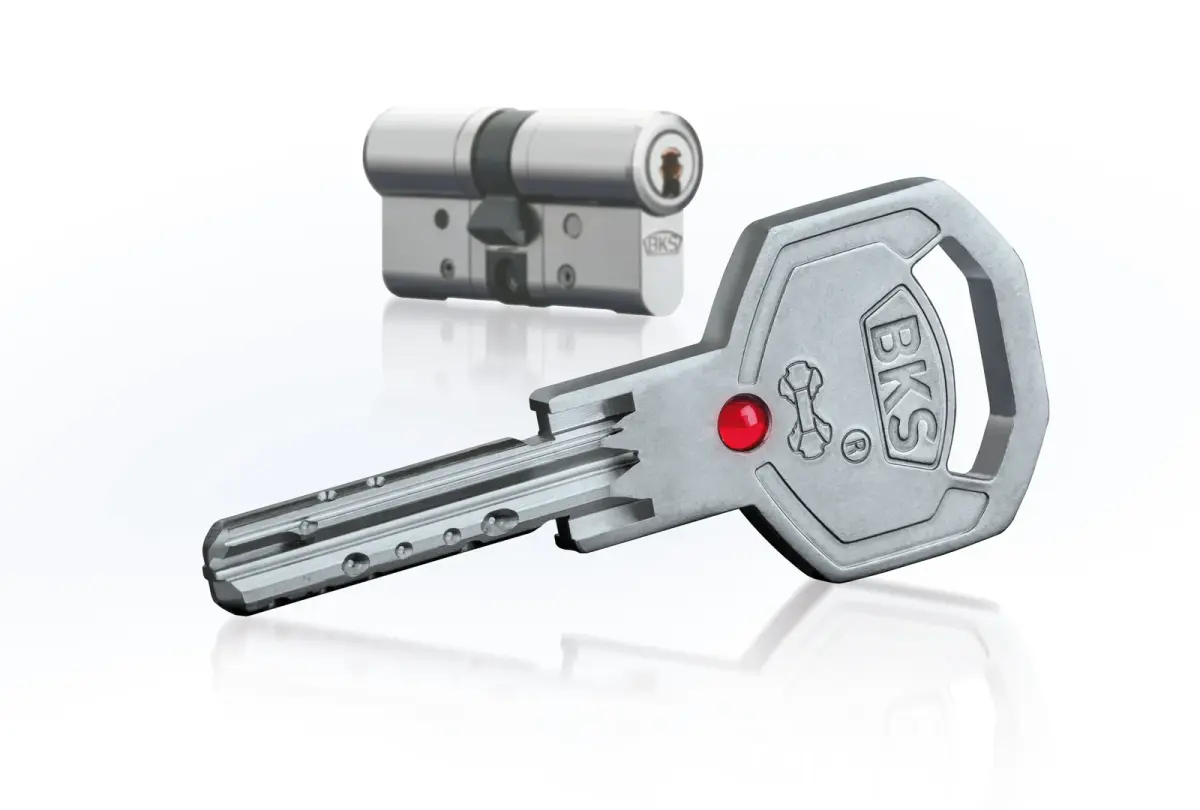
Identify the existing door and cylinder first
Euro-profile cylinders are used in many uPVC, composite and some other doors. The cylinder is the key-operated part, separate from the wider locking mechanism. An upgrade enquiry should begin by identifying that hardware and confirming that the rest of the door operates correctly. A security upgrade will not automatically repair a dragging door or failing gearbox.
Tell the locksmith whether the current arrangement is key-operated on both sides or uses an internal thumbturn. Mention any managed-building or specialist door specification. Those details affect the choice of a suitable replacement. Avoid ordering a cylinder because its front face resembles the existing one; the important dimensions and operating requirements are not all visible from the outside.
Ask which tested specification is being offered
The Master Locksmiths Association's current consumer guidance points to cylinders tested to Sold Secure SS312 Diamond or TS007 three-star protection when discussing resistance to snapping. Ask for the exact manufacturer, model, certification and current product information. Verify an advertised approval against the relevant certification source rather than assuming a familiar logo applies to every model in a range.
TS007 can also involve a combination of cylinder and protective door furniture; a one-star cylinder alone should not be described as equivalent to a three-star cylinder. Ask the supplier to explain the specification of the complete proposed arrangement. Different tests and ratings are specific claims, so broad language such as burglar-proof adds little to the decision.
- What is the exact cylinder model and current verified rating?
- Is the protection provided by the cylinder alone or a specified combination?
- Are the existing handles and mechanism suitable for the proposed product?
- Where can the product's approval and instructions be checked?
Correct dimensions and fitting still matter
A tested product needs to be the correct size and fitted as intended. Cylinders come in different inside and outside lengths, and the door furniture affects the finished fit. Some products also have a designated external side. Ask the installer to establish the dimensions and orientation rather than relying on an approximate measurement from memory.
After fitting, the key, handle and complete locking sequence should operate smoothly. Discuss the result at the door, not just the product packaging. Keep the model details and invoice so that a future replacement or maintenance question can be answered accurately. A rating is evidence about a tested product or arrangement, not a promise that any installation will prevent every form of entry.
Check policy wording and everyday key needs
If an insurer has specified a requirement, obtain its exact wording and confirm any uncertainty with the insurer. No general product description establishes acceptance under every policy. Similarly, a manufacturer's guarantee has its own terms and may require registration. Ask what applies to the particular product being considered, rather than assuming all upgraded cylinders carry the same cover.
Discuss the number of keys supplied and how additional authorised keys are obtained. If an existing key system serves several doors, explain it before changing one cylinder. Consider the needs of the people using the entrance and any responsible building manager's requirements. The choice should support normal use as well as the intended security specification.
Keep the product information after installation
Try all supplied keys, retain any registration instructions and follow the maintenance guidance for the chosen model. Do not assume that a lubricant recommended for another brand is suitable. Store key codes securely and avoid sharing close photographs of keys or registration cards publicly. With the exact model recorded, you can ask a precise question later instead of starting the identification process again.
Need help with your door?
Call 07337 571126, open 24/7, to talk through the fault and attendance availability for your address.
Explore the relevant serviceFurther reading & sources
- MLA: lock snapping and cylinder selection
- MLA: secure cylinders to resist snapping
- Yale: choosing a cylinder and combining TS007 ratings
- Sold Secure: approved product search
- ERA: three-star cylinder fitting, classification and maintenance
Product suitability depends on your door and existing hardware. Follow the instructions for the actual product fitted to your property.